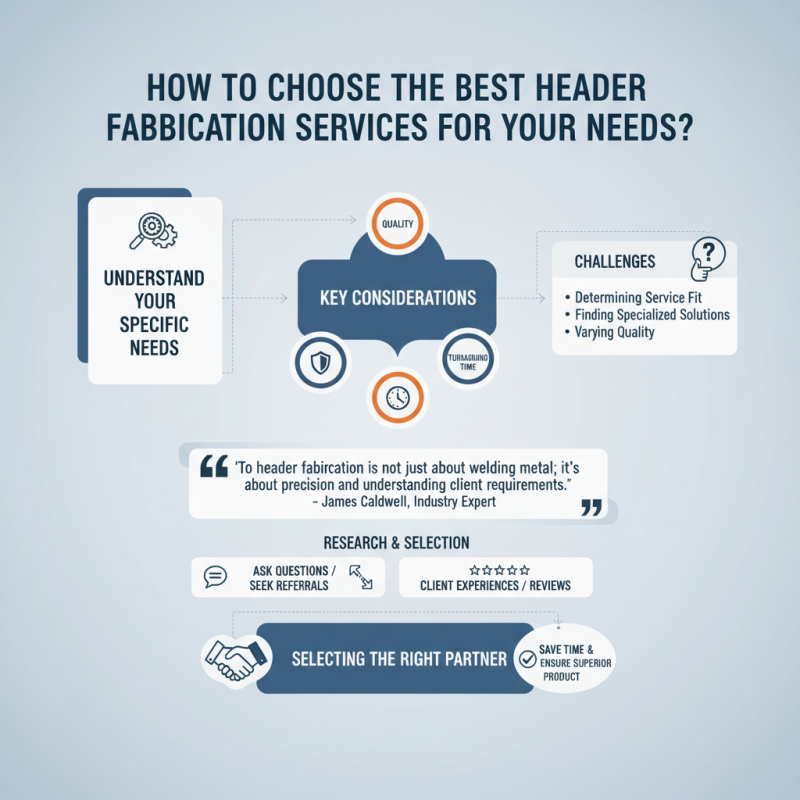
When selecting header fabrication services, understanding your specific needs is crucial. "To header fabrication is not just about welding metal; it’s about precision and understanding client requirements," says industry expert James Caldwell of Caldwell Fabrication. His insight emphasizes the significance of choosing professionals who can adapt to unique specifications.
Header fabrication involves various methods and materials. It requires a keen eye for detail and experience in handling different fabrication techniques. Clients often face challenges in determining which service meets their expectations. They must consider factors like quality, turnaround time, and cost-effectiveness. Furthermore, not all providers can deliver specialized solutions tailored to your needs.
The marketplace is filled with options, yet quality varies widely. Some may promise efficiency but compromise on craftsmanship. It's essential to ask questions and seek referrals. Experiences shared by previous clients can guide your choice. In the world of "to header fabrication," selecting the right partner can save time and ensure a superior product.
Header fabrication plays a crucial role in multiple industries including
automotive, construction, and aerospace. Properly fabricated
headers ensure strength and reliability in various applications. According to a report by the
Fabricators & Manufacturers Association, nearly 40% of companies report that inefficient
fabrication processes lead to product defects. This highlights the necessity for precision in fabrication services.
In the automotive sector, for instance, headers support performance and efficiency. A study from the
Society of Automotive Engineers found that optimized header designs can improve engine output by up to
10%. However, many businesses still struggle with outdated
fabrication techniques, leading to increased production costs and time delays. The right fabrication service can address
these gaps, providing tailored solutions to meet specific needs.
Similarly, in construction, headers play a vital role in structural integrity. The American Institute of Steel Construction
emphasizes that properly fabricated headers can significantly reduce risk factors in buildings. Neglecting quality in
fabrication can result in safety hazards and expensive repairs down the line. Industries must reassess their fabrication
strategies to ensure longevity and compliance with safety standards. Effective header fabrication can mitigate risks
and enhance performance across multiple sectors.
Choosing the right header fabrication services is crucial for ensuring the quality and durability of your projects. One of the first factors to evaluate is experience. Companies with years in the industry have likely faced a variety of challenges. Their solutions can be invaluable. Look for providers that demonstrate a history of successful projects. Real-world examples can showcase their capabilities.
Next, consider the technology and equipment they use. Advanced tools lead to better precision. Ask if the company keeps up with industry innovations. Older equipment might not yield the best results. Assessing their material sourcing is also essential. Are they using high-grade materials? This directly affects product longevity.
Communication is another vital aspect. A responsive team can accelerate project timelines. Addressing concerns in a timely manner is important for overall satisfaction. Finally, look for reviews and testimonials. Seek out past client experiences. They provide a clearer picture of reliability. Even a few negative comments can offer insight into areas needing improvement.
When choosing header fabrication services, understanding the various techniques is essential. Each technique offers unique benefits and applications. Common methods include welding, bending, and machining. Welding provides strong joints suitable for heavy-duty applications. Bending creates seamless shapes, leading to aesthetically pleasing designs. Machining ensures precision and fine details, crucial for complex projects.
Consider the materials used in these techniques. Steel, aluminum, and composites all behave differently under various fabrication methods. Steel is robust, while aluminum is lightweight and corrosion-resistant. Composites are versatile but may require specialized handling. The right material enhances longevity and performance in specific environments.
Challenges may arise when selecting a technique. Not all methods suit every design. For instance, complex shapes might not perform well with basic welding. Understanding these nuances can help avoid costly mistakes. Engaging with experienced professionals can provide insights into the best choices for unique needs. Prioritize reliable services with a proven track record to ensure quality and efficiency.
| Fabrication Technique | Material Used | Applications | Advantages | Cost Range |
|---|---|---|---|---|
| Laser Cutting | Stainless Steel, Aluminum | Automotive, Aerospace | High Precision, Minimal Waste | $100 - $500 per project |
| CNC Machining | Titanium, Brass | Industrial Equipment, Electronics | Complex Shapes, High Tolerance | $200 - $1000 per project |
| Metal Stamping | Steel, Aluminum | Consumer Goods, Automotive | High Volume, Cost-Effective | $50 - $300 per project |
| Welding | Mild Steel, Stainless Steel | Construction, Repair | Strong Joints, Versatile | $75 - $400 per project |
| 3D Printing | Plastic, Metal | Prototype Development, Custom Parts | Rapid Prototyping, Flexible Designs | $100 - $800 per project |
When selecting header fabrication services, understanding industry standards and certifications is crucial. Quality is not just about aesthetics; it impacts safety and performance. Look for companies that comply with ISO certifications. These standards ensure consistent quality in production processes. Also, check for compliance with American Welding Society (AWS) guidelines. This indicates expertise in welding procedures.
Another important aspect is the material used. Headers are typically made from various metals like aluminum and steel. Manufacturers should provide certifications for their materials. This guarantees they meet specific strength and durability requirements. Ask about traceability for your materials. It provides assurance of their origin and quality.
Consider the experience of the service provider. A company with years of operation typically has a deep understanding of quality control. However, not all long-standing companies adapt quickly to new technologies. This is where newer companies might exceed older ones in innovation. Researching customer reviews can provide insights into their past performance. Look for feedback about adherence to standards. This will help in your decision-making process.
When considering header fabrication, businesses face a pivotal choice: outsourcing or in-house production. Each option comes with its unique set of costs and benefits. Outsourcing can often be more economical upfront. Companies save on labor, equipment, and maintenance costs. Specialized firms may deliver higher-quality work, given their expertise. This can lead to time savings and reduced operational headaches.
On the flip side, in-house fabrication offers control. Companies can oversee the process and make swift adjustments as needed. However, there are hidden costs. Maintaining equipment and training staff can strain budgets. The team must stay updated on best practices. This adds complexity and can impact efficiency.
Ultimately, weighing these factors is crucial. Analyze long-term benefits against immediate costs. Consider your company's capabilities and goals. Making the right choice can enhance productivity and improve overall project outcomes. Reflecting on experiences and assessing resource allocation can lead to informed decisions in header fabrication.
: Experience is key. Companies with years in the industry can handle challenges effectively.
Advanced tools improve precision. Older equipment could result in lower quality outcomes.
High-grade materials enhance product longevity. Poor-quality materials may fail sooner.
A responsive team can speed up timelines. Timely answers to concerns boost satisfaction.
Common methods include welding, bending, and machining. Each has unique applications.
Different materials behave differently. Steel is strong, while aluminum is lightweight and resistant.
Outsourcing is often cost-effective but can lack control. Expertise may yield better quality work.
Not all methods suit all designs. Complex shapes may struggle with basic techniques.
Look for reviews and past client experiences. Negative comments can highlight improvement areas.
Hidden costs like equipment maintenance and staff training can strain budgets. Evaluate your needs carefully.
Choosing the best header fabrication services is crucial for various industries that rely on precision and quality in their operations. Understanding the importance of header fabrication involves recognizing its role in enhancing product performance and ensuring safety. When selecting fabrication services, key factors such as expertise, technology, and customization capabilities should be evaluated. A comparative analysis of different fabrication techniques reveals their unique applications and advantages, assisting businesses in making informed decisions.
Moreover, industry standards and certifications play a vital role in ensuring quality header fabrication, while a cost-benefit analysis can highlight the pros and cons of outsourcing versus in-house fabrication. Ultimately, to header fabrication effectively requires a careful consideration of these factors to ensure optimal outcomes for your specific needs.

Xinyunyang Precision